
Why this topic matters
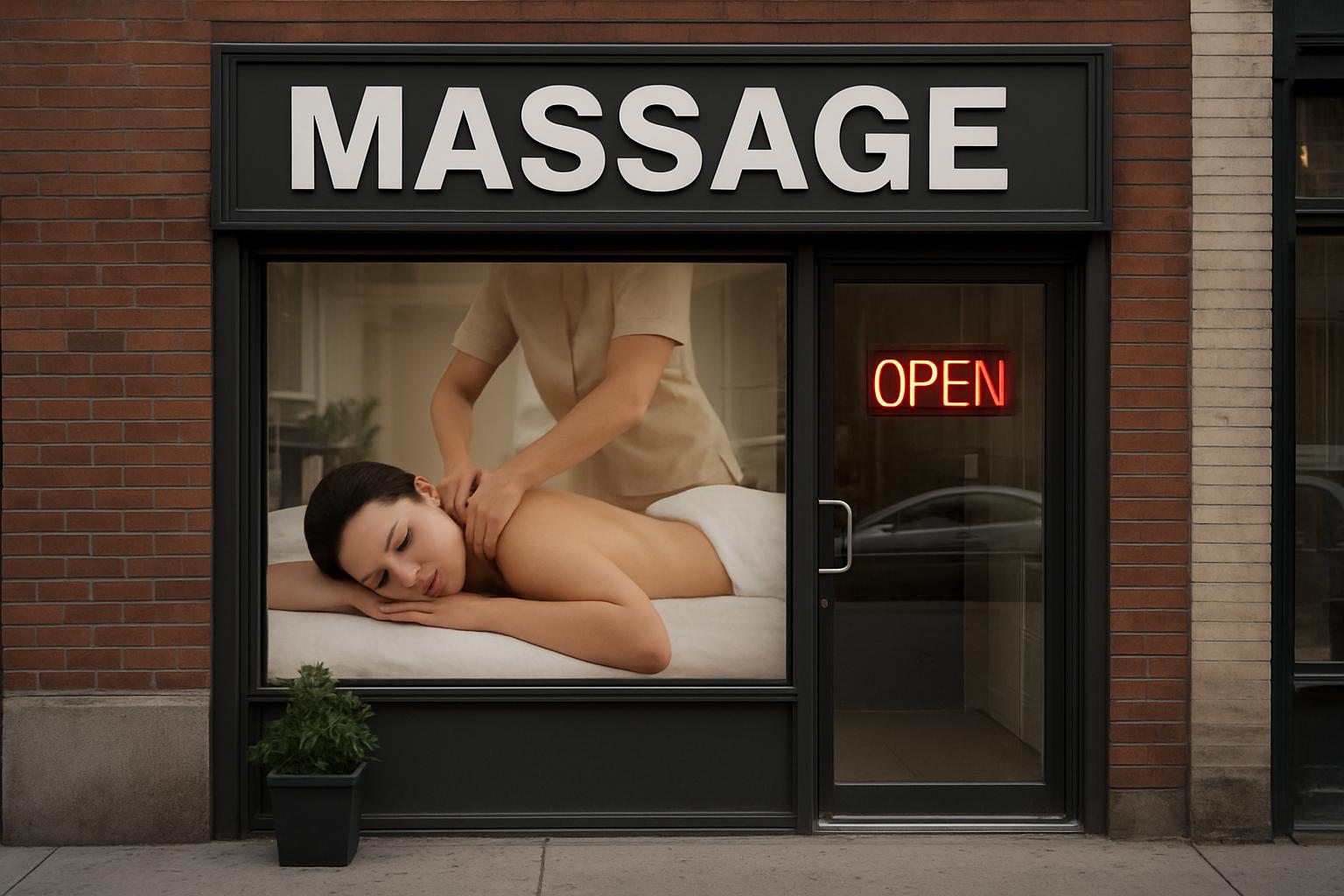
Walk a few blocks in any big city and you’ll see a cluster of massage signs, neon ads, and small storefronts offering «therapeutic» relief. In Montreal some of those places are fully legal health businesses; others are what people call «rub and tug» parlors—establishments that offer sexual services under the cover of a massage clinic. This article peels back how those operations work, why they exist, the legal and safety landscape in Montreal, and how anyone—visitor, resident, or worker—can navigate the issue responsibly.
How the story usually starts: an anecdote
Imagine arriving in the city after a long trip. A glowing sign advertises “massage” and “walk-ins welcome.” You step inside, the lobby is spare, and a clipboard lists services without credentials. This small scene repeats across neighborhoods: a tension between the ordinary and the illicit, between a legitimate health appointment and a hidden sexual economy. That tension is what policy makers, police, public health workers, and community groups grapple with daily in Montreal.
What «rub and tug» means in plain language
Definitions and euphemisms
The phrase «rub and tug» is slang for a massage parlor that covertly provides sexual services. Operators often use coded language, websites with suggestive photos, or unmarked storefronts to attract clients while avoiding scrutiny. These places vary widely: some are small, family-run operations; others are parts of organized networks. Beyond obvious moral judgments, the key issues are legality, consent, labor conditions, and public safety.
Why they exist
There are several overlapping reasons: demand for sexual services; gaps or grey areas in local regulation and enforcement; the relative ease of hiding sexual activity in a private room; and, for some operators, profit maximization. For workers, economic need, lack of alternatives, coercion, or trafficking can be factors. Understanding that mix is vital to any practical response.
The legal and regulatory landscape in Montreal
Federal and provincial context
Canada’s approach to sex work changed significantly with the 2014 Protection of Communities and Exploited Persons Act (PCEPA), which reshaped criminal liability around purchasing sex and some third-party activities. That shift created new legal risks for clients and organizers of sexual services, while leaving other aspects of sex work subject to complex local enforcement. Provincial regulation governs health professions and business licensing, which affects legitimate massage clinics and their oversight.
Municipal enforcement in Montreal
Montreal enforces bylaws related to business licensing, zoning, and public health. The Service de police de la Ville de Montréal (SPVM) handles criminal activity, while municipal inspectors and public health officials investigate breaches of regulations. Enforcement can include targeted raids, prosecutions, fines, and closure of premises. These actions are often accompanied by public discussion about human trafficking, organized crime, and public safety.
How to spot the difference: legitimate massage clinic vs illicit parlor
Not every small or unconventional clinic is illicit, but there are several practical signs that can raise legitimate concern. The table below summarizes common differences.
| Feature | Legitimate Massage Clinic | Illicit «Rub and Tug» Parlor |
|---|---|---|
| Licensing and credentials | Visible diplomas, professional association membership, registered therapist names | No credentials displayed; workers change frequently or are unnamed |
| Online presence | Clear service lists, professional website, clinic address and hours | Suggestive descriptions, coded wording, multiple anonymous listings |
| Physical layout | Reception desk, clear signage, visible business hours | Window coverings, curtained entrances, cash-only counters |
| Pricing | Itemized receipt, standard treatment times | Unclear pricing, “special services” offered off menu |
| Payment and booking | Credit cards accepted, appointment systems | Cash-only, text-based booking, private back-room negotiations |
Practical advice for different audiences
If you’re a client
- Prefer clinics with transparent credentials and clear scope of practice. Registered massage therapists should display certification and professional membership where applicable.
- Avoid establishments with heavily obscured windows, cash-only transactions, or vague service descriptions.
- Be aware of legal risks: changes to laws mean purchasers of sexual services can face criminal consequences in many circumstances.
- If you suspect coercion or trafficking, prioritize reporting to police or local hotlines rather than patronizing the place.
If you’re a worker
- Know your rights and local resources. Montreal has community organizations that provide legal advice, workplace support, and exit services for those who want them.
- Prioritize safety: keep a trusted contact, know emergency exits, and have an access plan to leave if asked to do something you’re uncomfortable with.
- If you experience exploitation or trafficking, reach out to organizations specializing in victim support or contact the police if it’s safe to do so.
If you’re a concerned neighbor or business owner
- Document carefully: keep dates, photos of signage, and notes about suspicious activity without putting yourself at risk.
- Report to municipal bylaw enforcement or SPVM if you suspect illegal activity. Community organizations can also guide how to report safely and effectively.
- Advocacy for clear licensing and better inspection regimes is a constructive local strategy to address systemic issues.
Public health and safety considerations
Illicit massage parlors pose public health challenges in several ways: inconsistent health standards, limited access to health services for workers, and potential spread of sexually transmitted infections when services are unregulated. Montreal public health authorities run education and outreach programs for both healthcare providers and at-risk populations. For workers, confidential testing and treatment resources exist through clinics and community organizations; for clients, typical sexual health precautions and testing remain important.
Community responses and organizations in Montreal
Montreal’s approach blends enforcement with support. Police efforts to dismantle networks are often paired with outreach from NGOs that work directly with sex workers to provide health services, legal counsel, and alternatives to exploitative labor. Organizations such as Stella (a Montreal-based collective advocating for the rights and safety of sex workers) are active in providing advocacy, resources, and harm-reduction services. Collaborations between municipal authorities and community groups tend to yield more humane, sustainable results than enforcement alone.
What to expect in the near term
Policy and public sentiment continue to evolve. Technological changes—online advertisements, encrypted messaging, and platforms—change how illicit services are arranged, making enforcement more complex. At the same time, pressure grows for more nuanced responses that address trafficking and exploitation while protecting consensual workers’ rights and health. For Montreal, this means ongoing debates about licensing, zoning, community safety, and the most effective ways to support vulnerable people involved in the industry.
Quick checklist: If you want to verify a massage clinic in Montreal
- Look for professional credentials and registration.
- Check the clinic’s website and legitimate review platforms for consistent information.
- Confirm payment options—credit card acceptance is a good sign of a formal business.
- Notice the presence of a receptionist and documented appointment system.
- If in doubt, consult municipal business registries or contact local health services for guidance.
Ethics, harm reduction, and practical compassion

Conversations about illicit massage parlors often split between calls for strict policing and arguments for decriminalization and harm reduction. Both sides share a common goal—reduce exploitation and protect public safety—but they differ in method. Practical solutions include better licensing enforcement, more accessible health and legal services for workers, public education about how to detect and report trafficking, and targeted policing that disrupts criminal networks rather than pushing vulnerable people further underground.
Where to get help or more information
- Emergency or immediate danger: call 911.
- Non-emergency concerns: contact the SPVM or municipal bylaw services for Montreal.
- Health questions: local public health clinics and sexual health centers can provide confidential testing and advice.
- Worker support and advocacy: Montreal-based organizations such as Stella offer legal, health, and advocacy resources for sex workers.
Conclusion: The phenomenon of «rub and tug» parlors in Montreal sits at the intersection of demand, law, health, and human rights; dealing with it requires more than surprise raids or casual avoidance. Practical steps—spotting red flags, supporting organizations that protect workers, reporting suspected trafficking, and favoring licensed clinics—help individuals act responsibly. At the municipal level, combining enforcement against criminal operators with robust outreach and services for vulnerable workers leads to safer outcomes for everyone involved, and keeps Montreal’s neighborhoods healthy, transparent, and accountable.